A Day Inside the GORE-TEX® Labs with HOKA
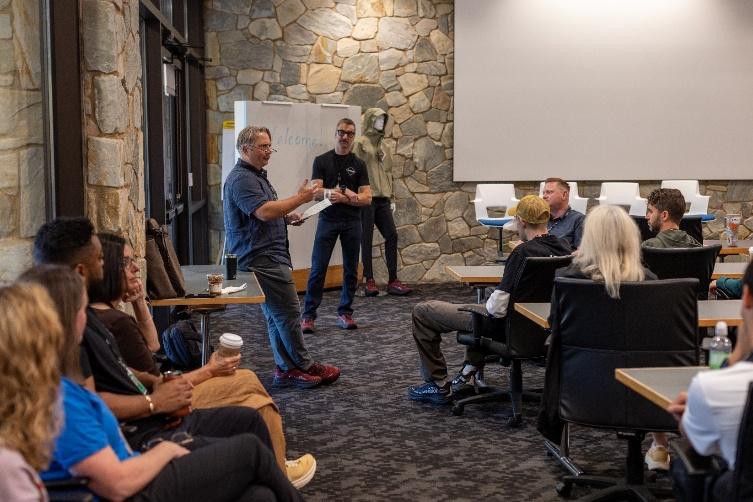
From the first welcome to the final wrap-up, GORE and HOKA designed the day as a hands-on journey into how GORE-TEX® product technologies come to life and how the long-standing partnership between the two brands continues to connect science, testing, product development, and consumer experience.
The story began with the foundation: fitness for use. We looked at how GORE and HOKA develop and qualify footwear for its intended consumer end use, and how GORE-TEX® Invisible Fit Technology supports HOKA running styles including Clifton 11 GTX, Speedgoat 7 GTX, and Speedgoat 7 HIKE GTX.
Invisible Fit Technology set the tone for the day. It invisibly bonds an innovative membrane and carefully selected textiles to the shoe upper, helping deliver the same true fit and feel as its unprotected equivalent while enabling durable waterproof, windproof, and breathable performance.
Panel Discussion:
Hearing the Product Story
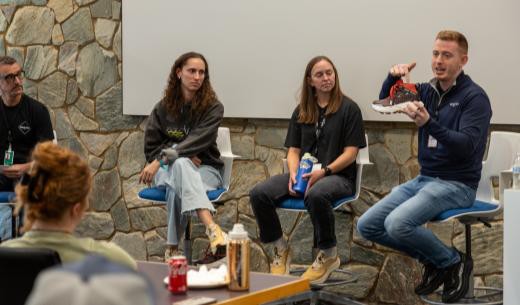
The panel brought the product story to life through the voices of HOKA product developers Chrissy Bettencourt and Hannah Neilon alongside GORE Product Specialist Mark Aboff. Together, they connected the updates in Clifton 11 GTX, Speedgoat 7 GTX, and Speedgoat 7 HIKE GTX to the core consumer benefits of GORE-TEX® Invisible Fit Technology.
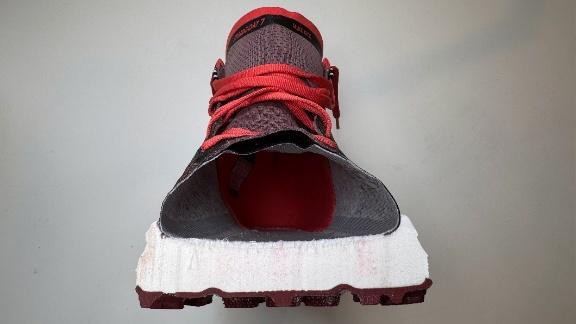
You heard how GORE designs the technology to support durably waterproof protection, reliable breathability, quick dry-out times, and a true fit and feel. The conversation also directly addressed common “hot and sweaty” questions by exploring thermal conductivity and the role of increased breathability.
Footwear Flexor Lab:
Earning Style Qualification
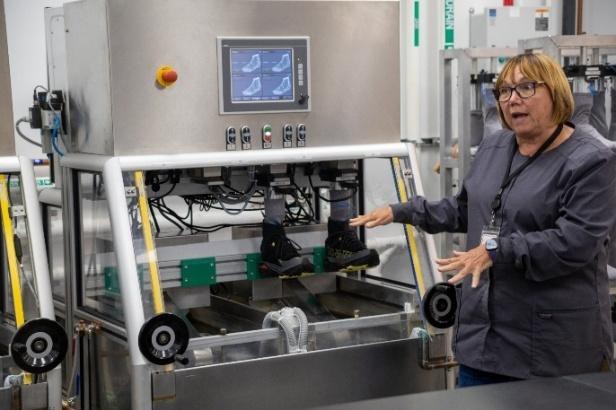
Next, the group stepped into the Footwear Flexor Lab to see how every single GORE-TEX® footwear style earns its qualification. Donna walked everyone through three required tests that every GORE-TEX® footwear style must pass before production.
1. Walking Simulator
At the Walking Simulator, you saw technicians submerge a shoe in water and flex it persistently to simulate walking in the rain. The test looks for wicking and leakage over time, and the shoe’s intended end use determines how long it runs.
2. Centrifuge Test
The Centrifuge Test showed another layer of durability evaluation. Technicians fill shoes with water, mount them to the device, and spin them rigorously for 30 minutes at approximately 250 rpms. If they detect a leak, they inspect it and identify it in the style qualification report.
3. Wicking Test
The Wicking Test completed the picture by examining the absorption behavior of shoe components such as upper textiles, laces, and threads. The goal is to ensure components do not wick water up and over the shoe; only components with an absorption rate of less than 1 cm after 2 hours pass.
Rain Room:
Walking Through Engineered Weather
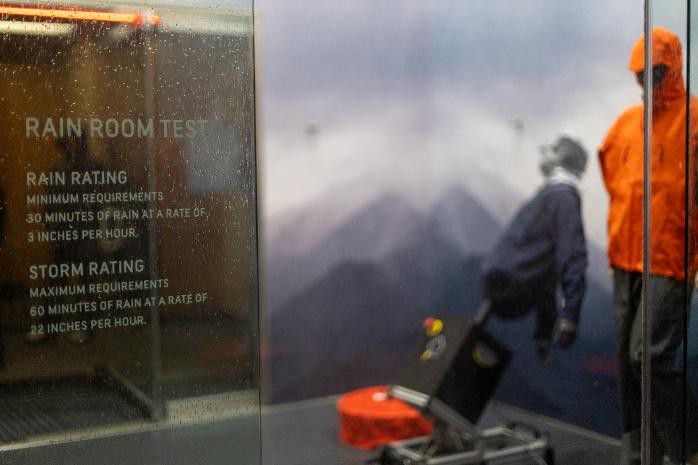
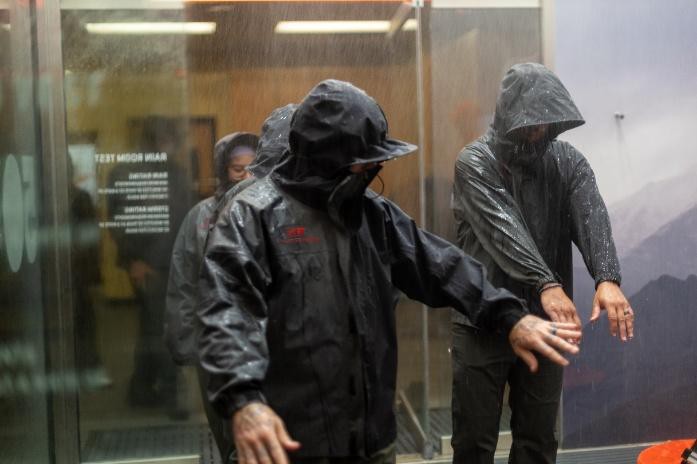
GORE’s very own weather machine. From footwear testing, the journey moved into the Rain Room. GORE uses the Rain Room as one of many tests in its garment style qualification process. Engineered rain nozzles throughout the chamber test a garment’s waterproof design in conditions ranging from light drizzle to heavy downpour. Every garment must pass between 3 and 22 inches of rain per hour depending on its intended end use. You experienced 3 inches of rain per hour firsthand.
Biophysics Chamber:
Understanding Comfort in Changing Conditions
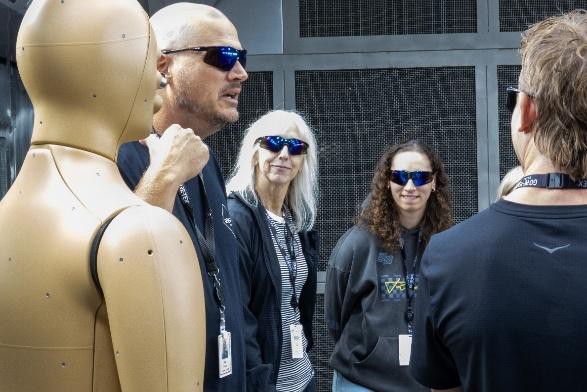
The Biophysics Chamber added another dimension to the day: comfort. Ray (and Walter) helped explain that comfort is often the lack of discomfort, and showed how thermal resistance, insulation, evaporative resistance, and breathability all influence what a person feels as conditions change. Because it can simulate roughly 98% of the world’s ambient conditions, the chamber plays an important role in GORE’s research and development process.
Fenice Prototyping Lab:
Building Innovation
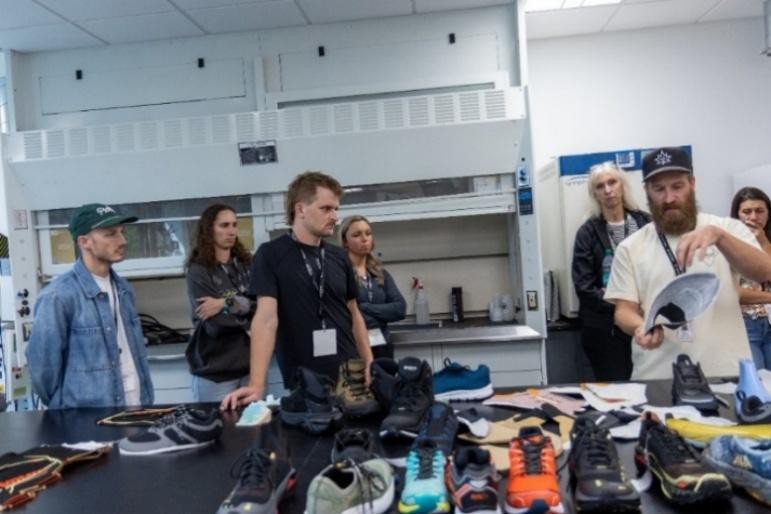
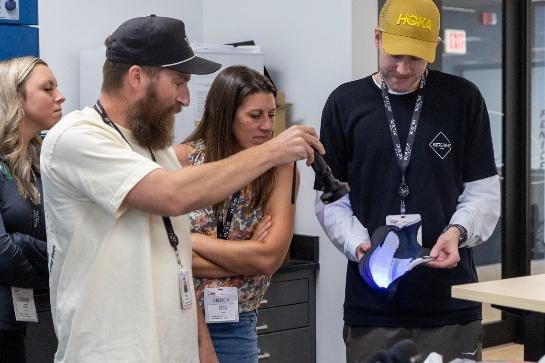
The Fenice Prototyping Lab showed how the team conceptualizes, tests, cuts open, rebuilds, and refines technical footwear. Rob, Kyle, and James used cut shoes and hands-on examples to show how GORE-TEX® Invisible Fit Technology has evolved over time — and how the collaboration between HOKA and GORE helps bring new concepts to life. A few brave volunteers also got to try seam sealing firsthand!
Wrap Up Activity:
Bringing It All Together
The wrap up connected the day’s experiences back to a simple but powerful question: how do waterproofness and breathability work together? The answer lives in the GORE-TEX® membrane, which GORE builds from expanded Polyethylene (ePE). It is light, thin, and strong, enabling durable waterproof, windproof, and breathable performance.
The day closed with a reminder of what the labs made visible: HOKA and GORE build GORE-TEX® products through science, material and design expertise, rigorous qualification, and a commitment to helping people stay protected and comfortable in changing conditions.
Reflection:
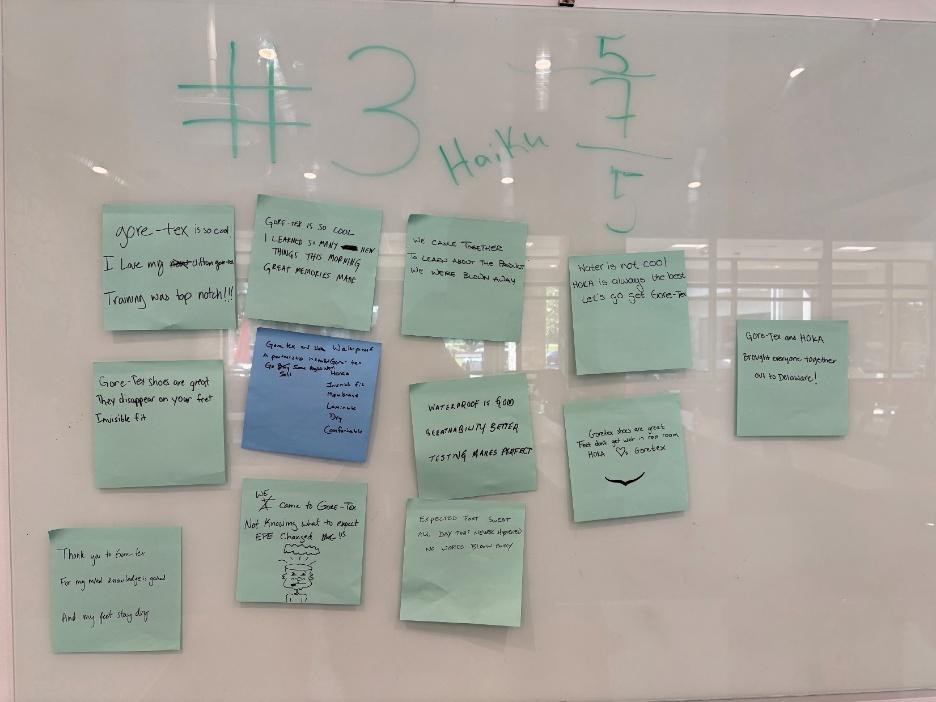
Haikus from the Day
You can find details on the membrane here: https://www.gore-tex.com/technology/membrane
You can find the GUARANTEED TO KEEP YOU DRY™ Promise here: https://www.gore-tex.com/support/guarantee-and-returns