A Parent’s Guide to Buying Kids’ Shoes
Everything to Check Off Your List Before Back-to-School
Back-to-school shopping has a way of turning into a checklist marathon — backpacks, folders, lunch boxes, and somewhere near the bottom, shoes. But shoes deserve more than a rushed decision at the end of a long shopping trip. Kids’ feet grow fast, they’re still developing, and the wrong fit can cause real problems — from blisters and slipped heels to posture and gait issues down the road.
This guide walks through everything a parent actually needs to know: how much growing room is really enough, which sizing “rules” are actually myths, what to look for based on your child’s activities, when back-to-school timing matters most, and the warning signs that a pair of shoes just isn’t working — no matter how much your kid insists otherwise.
Growing Room & Sizing Myths
Every parent has heard some version of the “rule of thumb” — literally, pressing a thumb behind the heel to check for space. It’s not a bad instinct, but it’s not the full picture either. Here’s what’s myth and what’s fact.
| The Myth | The Reality |
|---|---|
| “Buy a size (or two) up so they last longer.” | Too much room causes sliding, blisters, and tripping — and can actually change how a child walks or runs to compensate. |
| A thumb’s width behind the heel is all you need to check. | It’s a helpful starting point, but it doesn’t account for width, arch length, or how a shoe fits once a child is standing and moving — not just sitting. |
| Kids’ shoe sizes stay accurate for a full school year. | Young kids’ feet can grow half a size or more in just a few months. A size that fit in August may be tight by winter break. |
| If two kids wear the same size, they’ll fit the same shoe the same way. | Width, arch shape, and volume vary widely. Two kids in a “size 2” can need completely different shoes — even siblings. |
| A size 2 is a size 2, no matter the brand. | Every shoe brand builds on its own “last” — the mold that shapes the shoe — so sizing isn’t universal from one brand to the next. The number on the box matters less than how the shoe actually fits your child’s foot. |
| “They can still get their foot in it, so it still fits.” | Fitting into a shoe and fitting a shoe correctly aren’t the same thing. Once kids reach grade school, feet grow roughly one full size per year on average — a shoe your child can technically squeeze into may already be too small. |
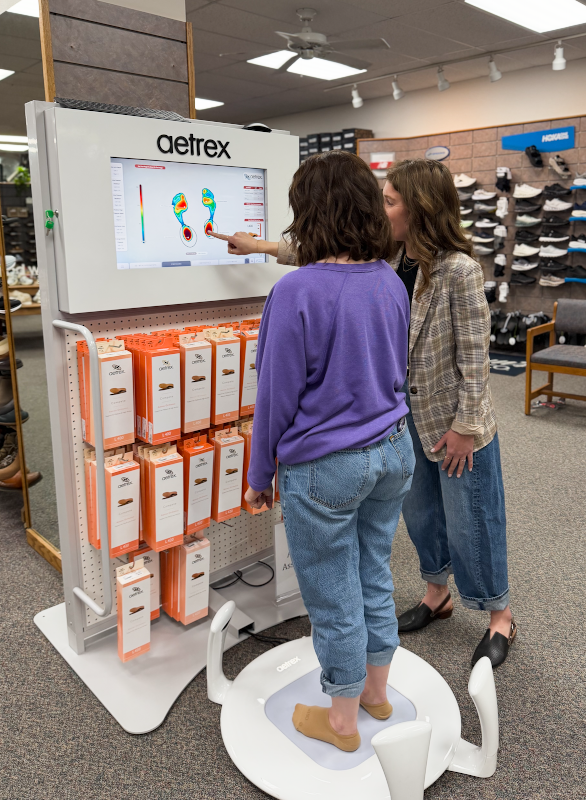
Our in-store fit specialists generally recommend about a thumb and a half of space beyond the longest toe — roughly 1/2 to 3/4 inch, though this varies a bit depending on hand size. It’s a bigger allowance than the classic “one thumb” rule, and it’s worth checking with a proper measurement rather than eyeballing it, since kids’ feet grow faster than most parents expect. Fit events and in-store measurements consistently turn up parents who are surprised by just how much their child’s foot has grown since the last check.
“You’re not a bad parent for not knowing what size your child wears — they grow so quickly that it’s hard to keep up! But that’s exactly why it’s so important to make sure they haven’t already outgrown the shoes you just bought them.” — Tori Miller, Brown’s Shoe Fit Marshalltown
Back-to-School Timing:
Why “When” Matters as Much as “What”
Most families shop for school shoes right before the first day — which makes sense, but it isn’t necessarily the best time to get an accurate fit. A few timing tips that make a real difference:
- Shop later in the day. Feet naturally swell a little throughout the day, so an afternoon or evening fitting gives a more accurate sense of true fit than a first-thing-in-the-morning measurement.
- Measure both feet, every time. It’s common for one foot to be slightly larger than the other. Fit to the larger foot.
- Don’t shop too early. Buying school shoes in June for an August start sounds proactive, but growing kids can outgrow them before the first bell rings. A few weeks before school starts is usually the sweet spot.
- Plan for a mid-year check. For younger, fast-growing kids especially, it’s worth a quick re-fit around winter break rather than assuming August’s size holds all year.
- Bring the socks they’ll actually wear. Thick winter socks versus thin athletic socks can change fit more than people expect.
Matching Shoes to What Kids Actually Do
“School shoes” isn’t really one category — a kid who has recess, gym class, and an after-school sport needs different things than a kid who’s mostly sitting at a desk. A well-fitted shoe with proper arch support does more than just feel better: it adds stability across all of it, and comfortable feet tend to move better, too — supporting coordination and balance that carry over into good walking habits and healthy feet long-term. A few activity-specific considerations:
Everyday School Wear
Look for a flexible but supportive sole, a secure closure (laces or velcro, depending on age and independence level), and breathable material for kids who are active all day between classes, recess, and the walk to and from the bus.
Gym Class & Sports
Court and field activities call for more lateral support and cushioning than a standard school shoe offers. If your child has PE multiple times a week or plays a sport, a proper athletic shoe built for that movement pattern is worth the separate pair.
Recess & Outdoor Play
Traction matters more than most parents expect — playground surfaces, wet grass, and mulch can all get slippery. A durable outsole with good grip helps prevent slips as much as it protects the shoe itself.
Growing Independence
For younger kids still mastering laces, velcro or bungee-lace styles offer security without requiring help getting shoes on. For older kids ready for the responsibility, real laces (and learning to tie them) can be part of the growing-up process — just make sure the fit holds up either way.
Red Flags: Signs a Shoe Isn’t Working
Kids aren’t always the most reliable narrators when it comes to how their shoes feel — a shoe that’s too small might just get labeled “uncomfortable,” and a shoe that’s too big might not get mentioned at all. Watch for these signs instead of relying on a kid’s self-report alone.
| What You Notice | What It Might Mean |
|---|---|
| Red marks, blisters, or calluses after wear | The shoe is rubbing somewhere it shouldn’t — often a sign of the wrong width or shape, not just length. |
| Heel slipping out with every step | The shoe is too big, or the wrong shape for your child’s heel — a common cause of tripping. |
| Toes visibly pressing against the front | Not enough growing room — time for a new size, even if it “still zips up.” |
| Sudden reluctance to walk, run, or play | Discomfort a younger child may not be able to explain in words. |
| Uneven wear on the outsole | Can point to a fit or gait issue worth having checked, rather than just a shoe replacement. |
| Shoes that look fine but your child avoids wearing them | Kids often can’t articulate discomfort — avoidance is sometimes the clearest signal there is. |
| Walking on tiptoes or the front of the foot | A shoe that’s too small can push a child to shift their weight forward to avoid pressure on the toes. |
| Increased clumsiness or imbalance | Can happen with shoes too small or too big — either extreme changes how a child balances and moves. |
Fit problems on either end of the spectrum — too tight or too loose — don’t just cause blisters and tripping. Over time, they can put extra strain on a child’s lower back, hips, knees, and ankles as their body compensates for the poor fit. Making sure you go to a shoe specialist who will sit down and measure your kid’s feet to get the proper fit is so important.
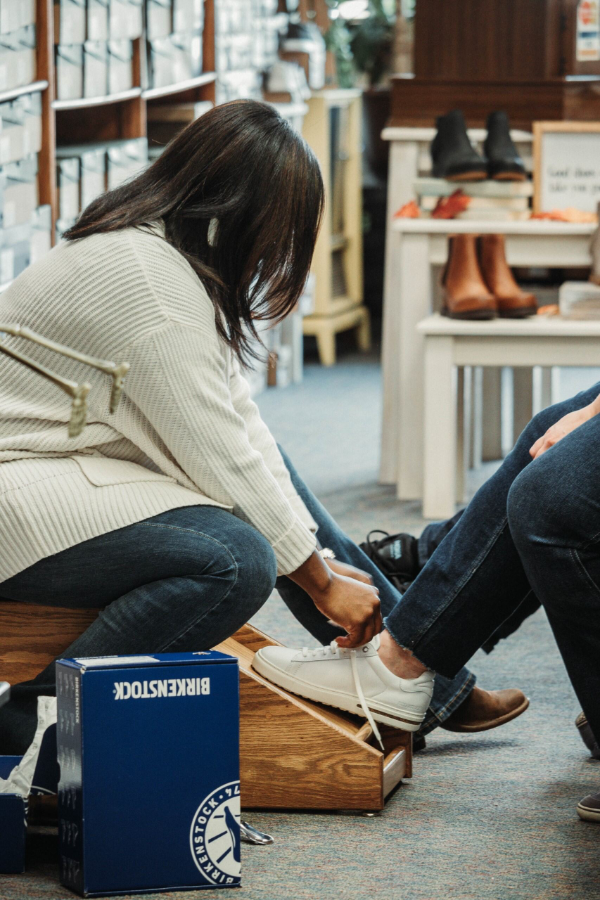
At Brown’s Shoe Fit, we pride ourselves on taking the time to measure both feet, check the fit and help find the perfect shoe for the person in front of us. The right fit doesn’t just feel better; it helps give your kids the confidence to be active and ready for whatever the school day brings them! – Tori Miller, Brown’s Shoe Fit Marshalltown
Quick Back-to-School Checklist
- Measure both feet, standing, later in the day
- Bring the actual socks your child will wear with the shoes
- Check for about a thumb’s width of space beyond the longest toe
- Match the shoe to the activity — school, gym, and outdoor play may call for different pairs
- Watch (don’t just ask) for signs of a poor fit over the first few weeks
- Plan a mid-year re-check for fast-growing kids
Why Buy Yours From Brown’s Shoe Fit Co.?
With 73 locally owned and operated locations across the Midwest, Brown’s Shoe Fit Co. has been a trusted name in footwear since 1911. Known for our personalized service and commitment to quality, Brown’s Shoe Fit is the go-to destination for comfortable, quality footwear for all ages. Each of our stores offers a footwear selection unique to the needs of our communities, with a knowledgeable staff trained to give every customer the best fit possible. To learn more about us, visit brownsshoefitco.com or find a store near you!