Common Foot Problems & How the Right Shoes Can Help
Hi friends! I’m Emily, owner of Brown’s Shoe Fit Co. here in Storm Lake, and if there’s one thing I’ve learned after years of fitting shoes, it’s this: your feet put up with a lot. They carry you through every single day — long shifts, busy errands, weekend adventures — and most of the time, they do it without complaint.
But when something’s off? They let you know.
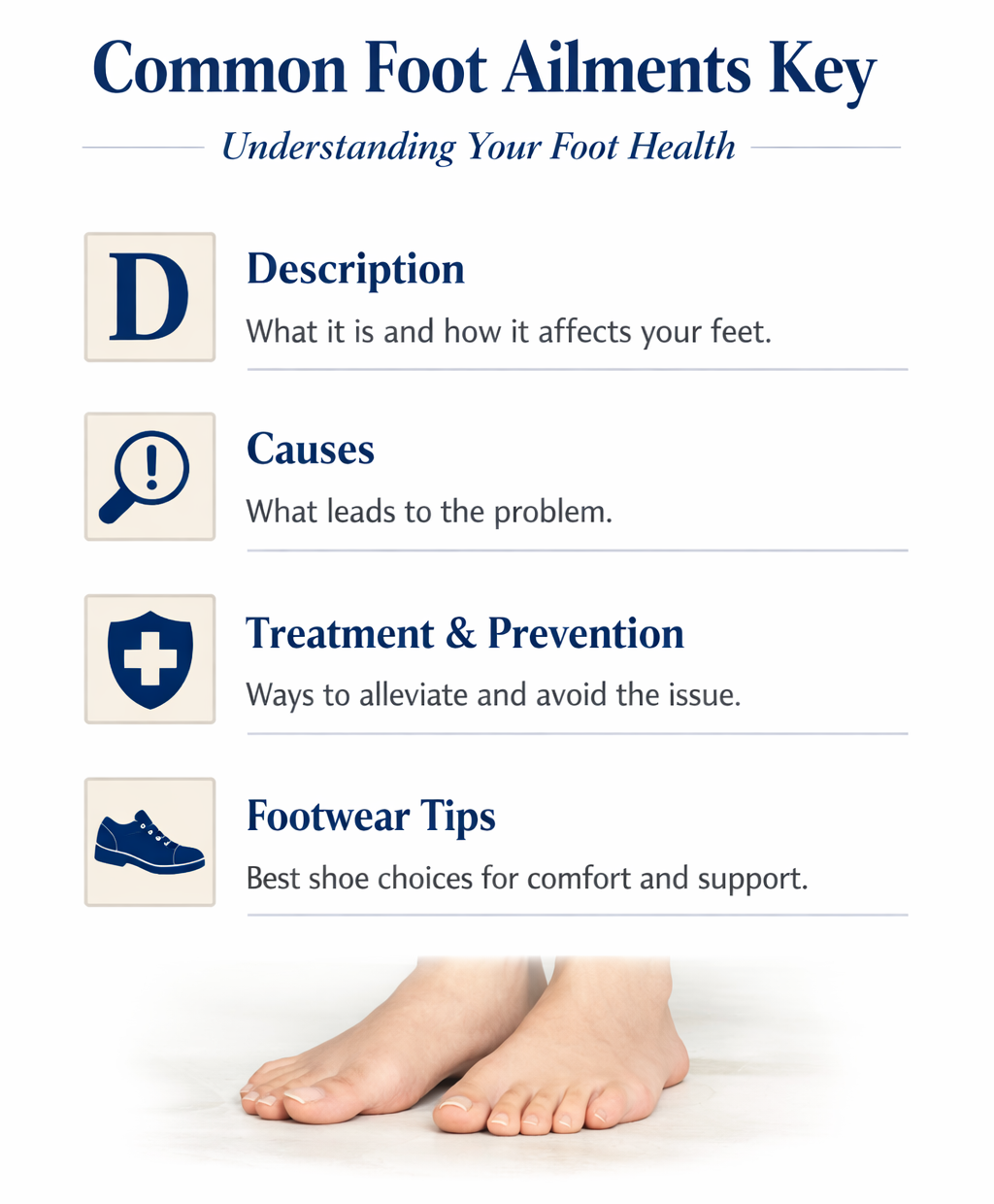
Over the years, I’ve had so many customers come in dealing with foot pain they’ve just been living with, not realizing that the right pair of shoes — or sometimes just a better understanding of what’s going on — could make a world of difference. So today I want to walk you through some of the most common foot conditions I see, what causes them, and what you can do about it. Consider this your friendly guide from someone who genuinely cares.
Understanding Pronation and Supination
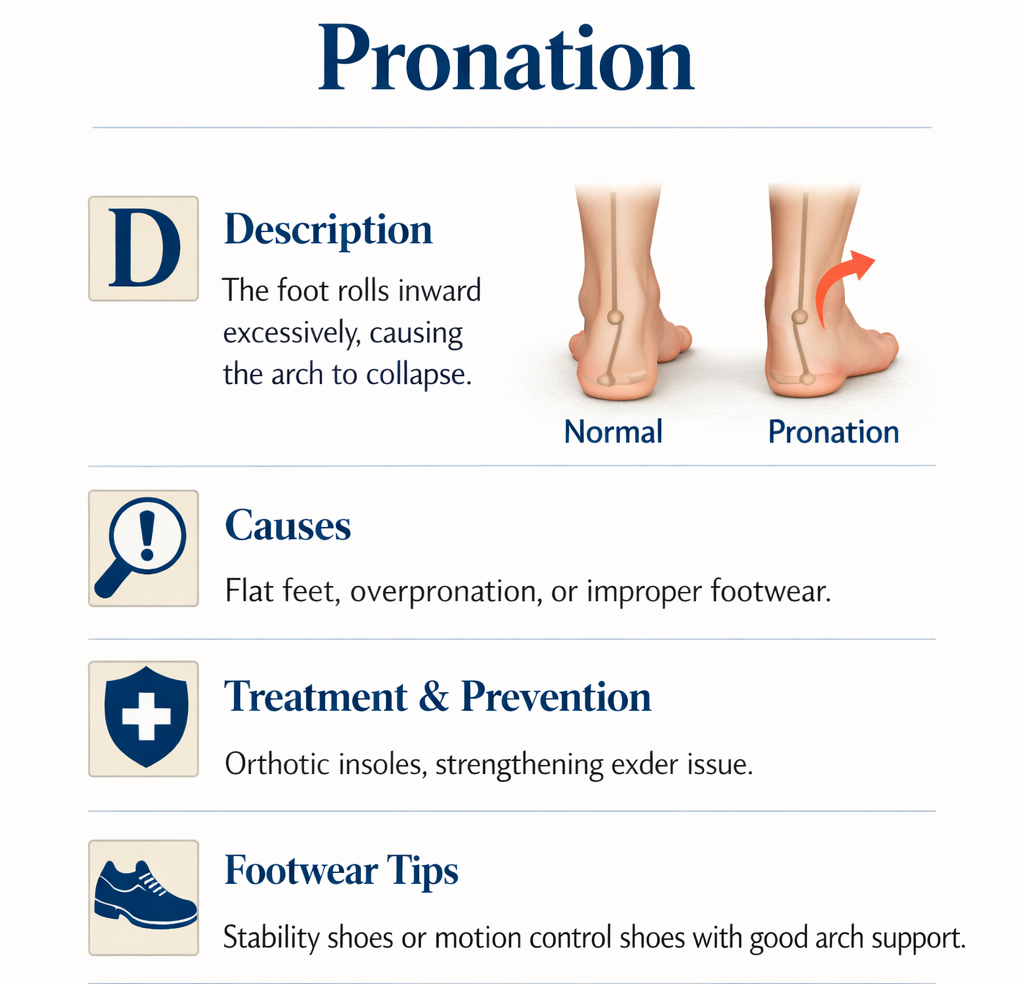
Pronation is when your foot rolls inward after your heel strikes the ground. A little bit of this is totally normal and actually helpful — it’s your foot’s way of absorbing shock and adapting to the surface beneath you. The trouble starts with overpronation, when the foot rolls too far inward and puts excessive pressure on the inner edge. Over time, that can lead to plantar fasciitis, shin splints, and knee pain. Overpronation is often connected to flat feet or low arches, but improper footwear or muscle imbalances can cause it too.
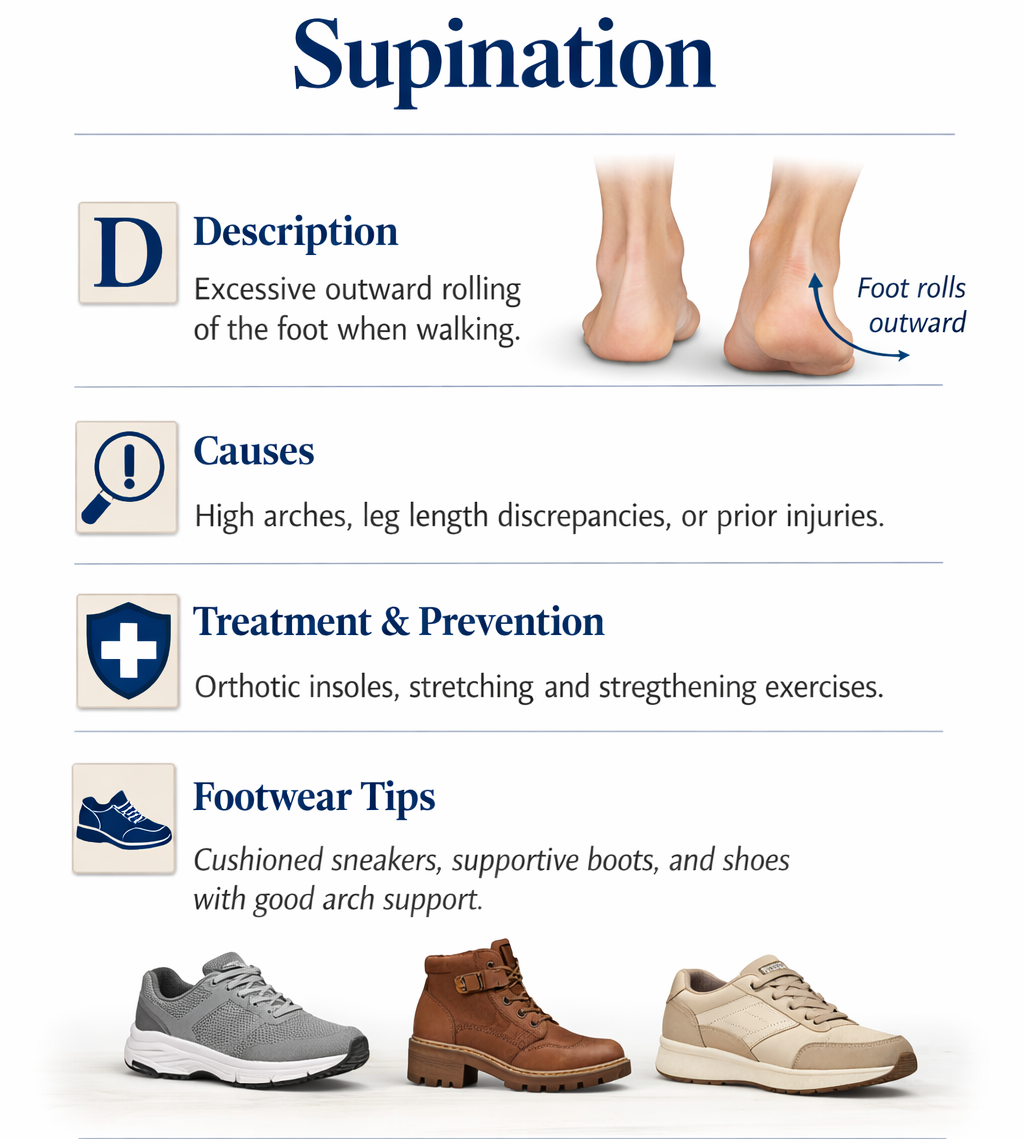
Supination is the opposite — the foot rolls outward after the heel strikes the ground. A small amount is normal, especially for folks with high arches. But excessive supination means your foot isn’t absorbing shock the way it should, putting stress on the outer foot, ankles, and knees. That can lead to ankle sprains, stress fractures, and achilles tendinitis.
Here’s why this matters to me as a shoe fitter: many athletic shoes are specifically designed for different pronation types. When I’m working with a customer, understanding how their foot moves is one of the first things I’m thinking about. It shapes everything else.
Common Foot Conditions — and What to Do About Them
What Are Bunions and How Do You Treat Them?
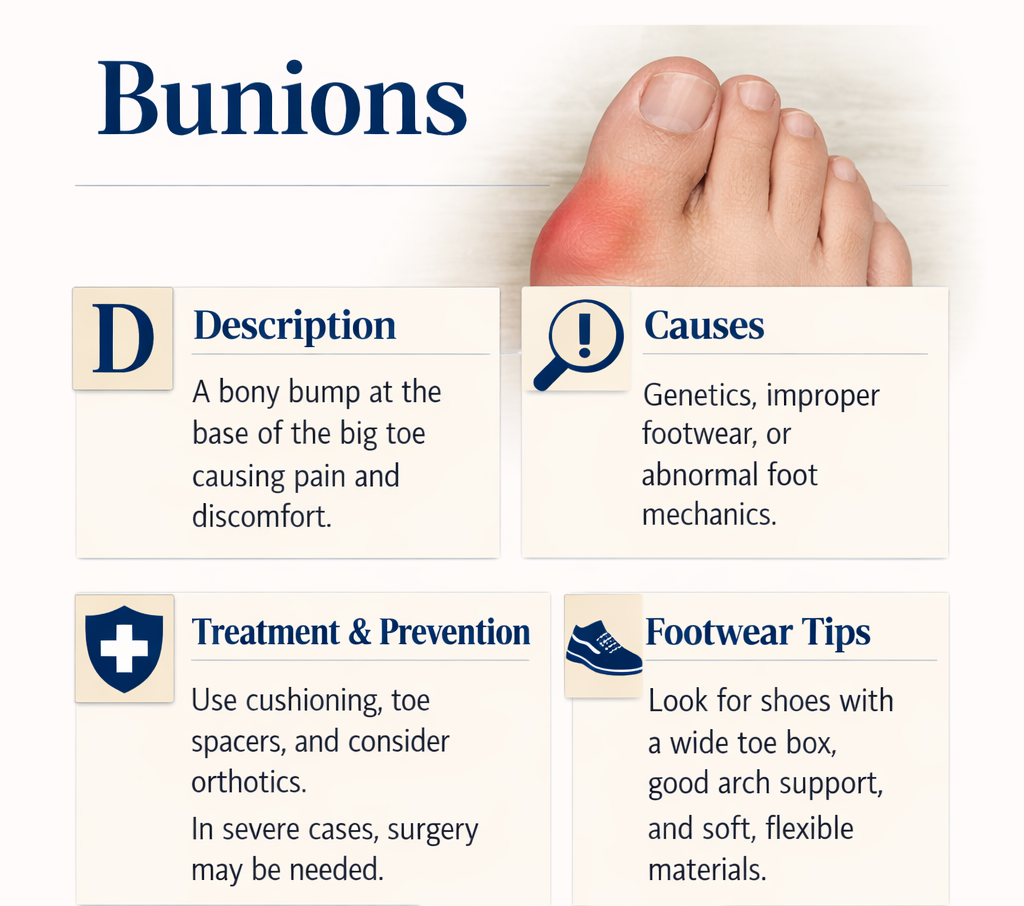
A bunion is a misaligned toe joint that swells and becomes tender — that bony bump on the inside of the foot at the base of the big toe. They’re often genetic, but tight or narrow shoes can absolutely make them worse or bring them on sooner.
Treatment ranges from better footwear and orthotics to reduce pressure, all the way to surgery in more serious cases. Shoes with a roomy toe box and low heels are your best friend here. I can’t tell you how many customers have come in with bunion pain that improved dramatically just from switching to a shoe that actually gave their toes room to breathe.
What Causes Hammertoes and What Shoes Help?
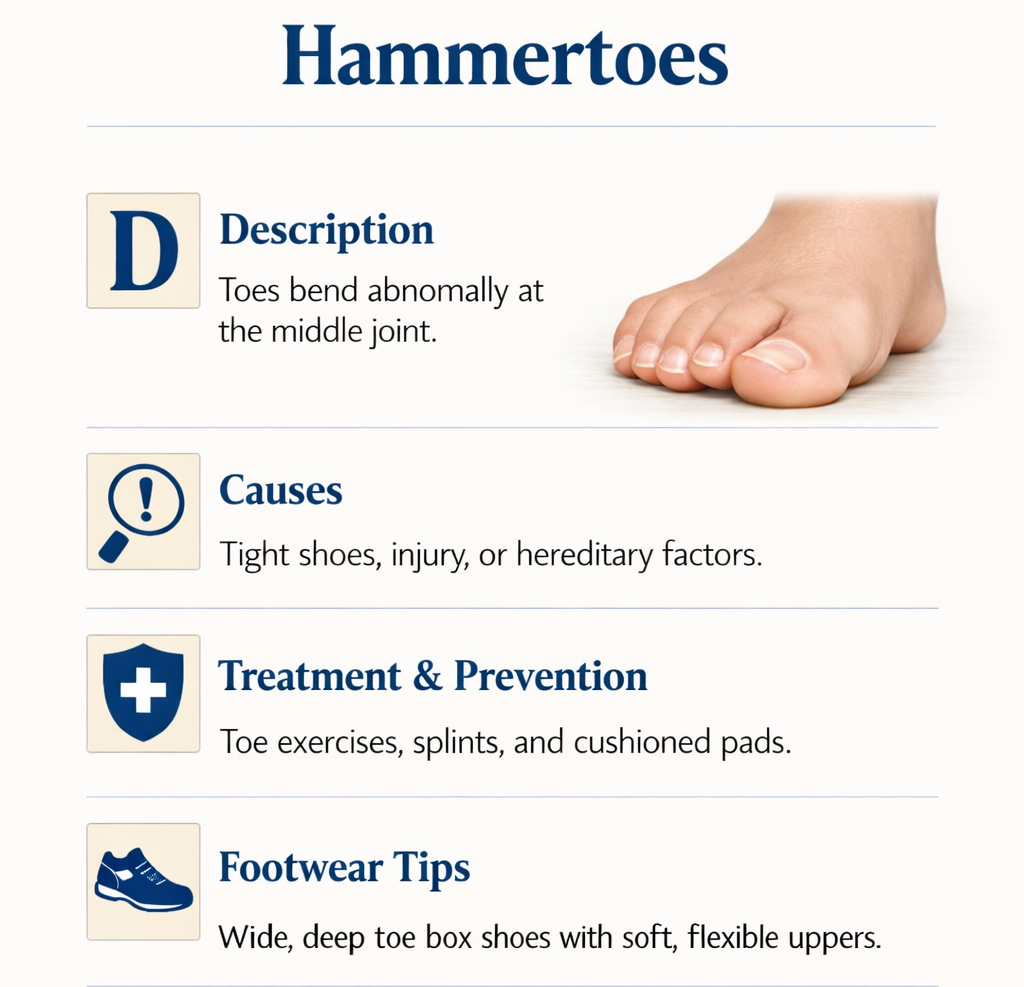
A hammertoe is when a toe — usually the second one — gets stuck in a bent, claw-like position. It’s often caused by muscle imbalance or shoes that are too tight, and it frequently shows up alongside bunions.
Padding, splints, and sometimes surgery are the medical route. For footwear, the goal is a deep, roomy toe box, a flexible mesh upper, and light, non-compressive socks to avoid adding any extra pressure to already-unhappy toes.
Heel Spurs:
Causes, Symptoms, and Footwear Solutions
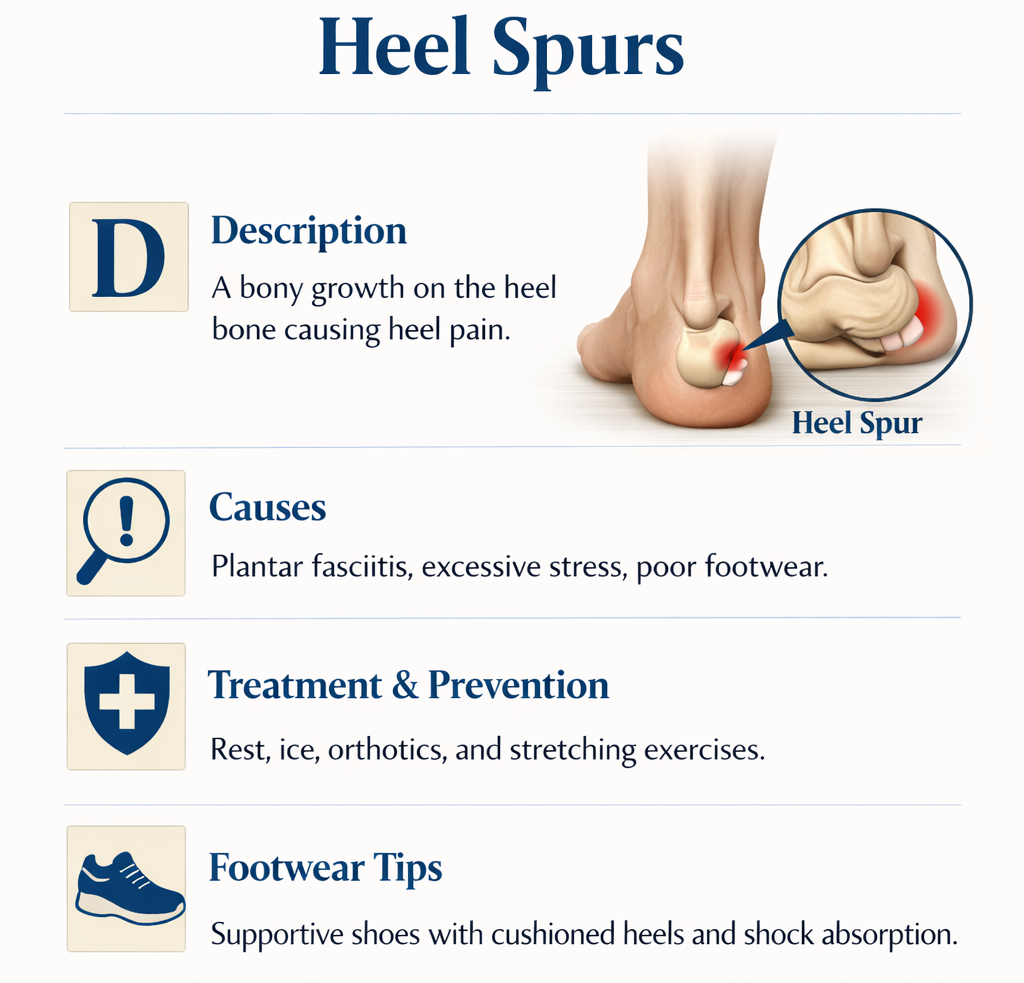
Heel spurs are calcium deposits that form at the bottom of the heel bone, and they’re closely associated with plantar fasciitis. The plantar tendon pulls at its attachment point on the heel bone, and over time, that tension causes calcification.
Treatment typically includes ice, rest, anti-inflammatory medications, stretching, and orthotic inserts. Footwear-wise, shoes with solid arch support and cushioned heels go a long way toward absorbing shock and taking pressure off that painful spot.
Corns and Calluses:
How Proper Footwear Prevents Them
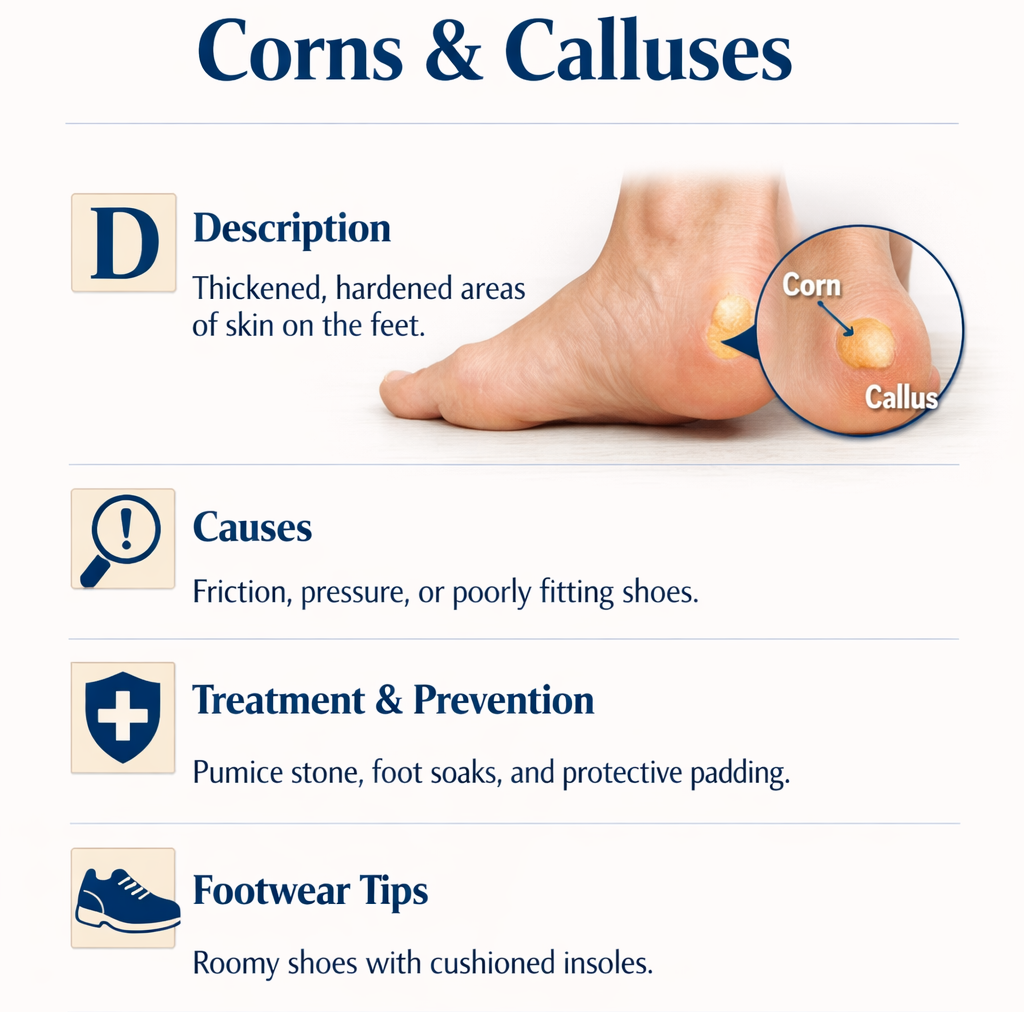
Corns and calluses are protective layers of compacted, dead skin — corns show up on the toes, calluses on the soles. Both are caused by repeated friction or pressure, most commonly from poor-fitting shoes.
Exfoliating, moisturizing, and padding the affected areas can help, and a podiatrist is always a good resource for more serious cases. The shoe fix is often simpler than people expect: proper fit, cushioned insoles, and soft materials that reduce friction. Sometimes the simplest solution really is just a shoe that fits the way it’s supposed to.
Morton’s Neuroma:
Symptoms and the Best Shoes to Wear
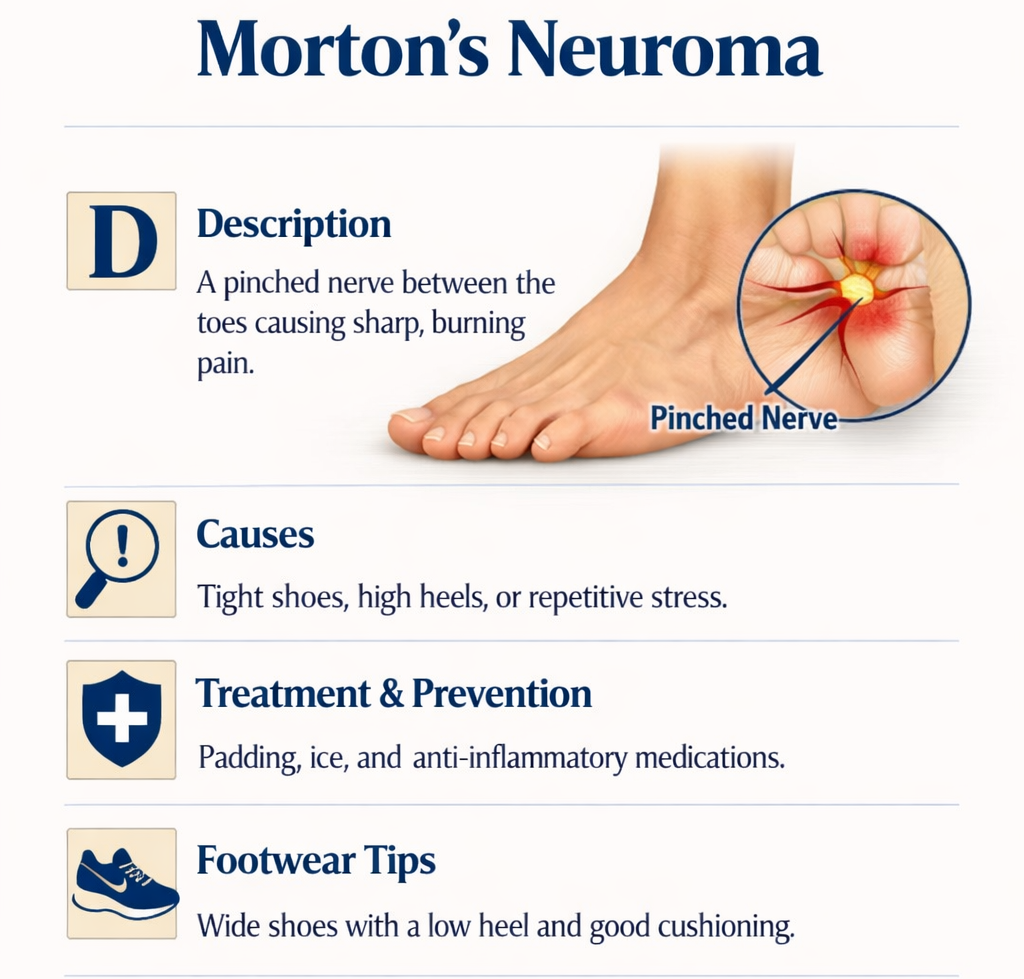
Morton’s neuroma sounds scary but is actually quite common — it’s an enlarged benign nerve growth usually located between the third and fourth toes. It feels like you’re walking on a pebble that isn’t there, or like there’s something bunched up inside your sock.
It’s caused by tissue rubbing against and irritating the nerves, often due to ill-fitting shoes or high heels. Treatment includes orthotics, cortisone injections, and sometimes surgery. For shoes, a low heel, a roomy toe box, cushioning, arch support, and a breathable mesh upper all help keep pressure off that sensitive area.
Plantar Fasciitis:
Why Your Heel Hurts and How to Fix It
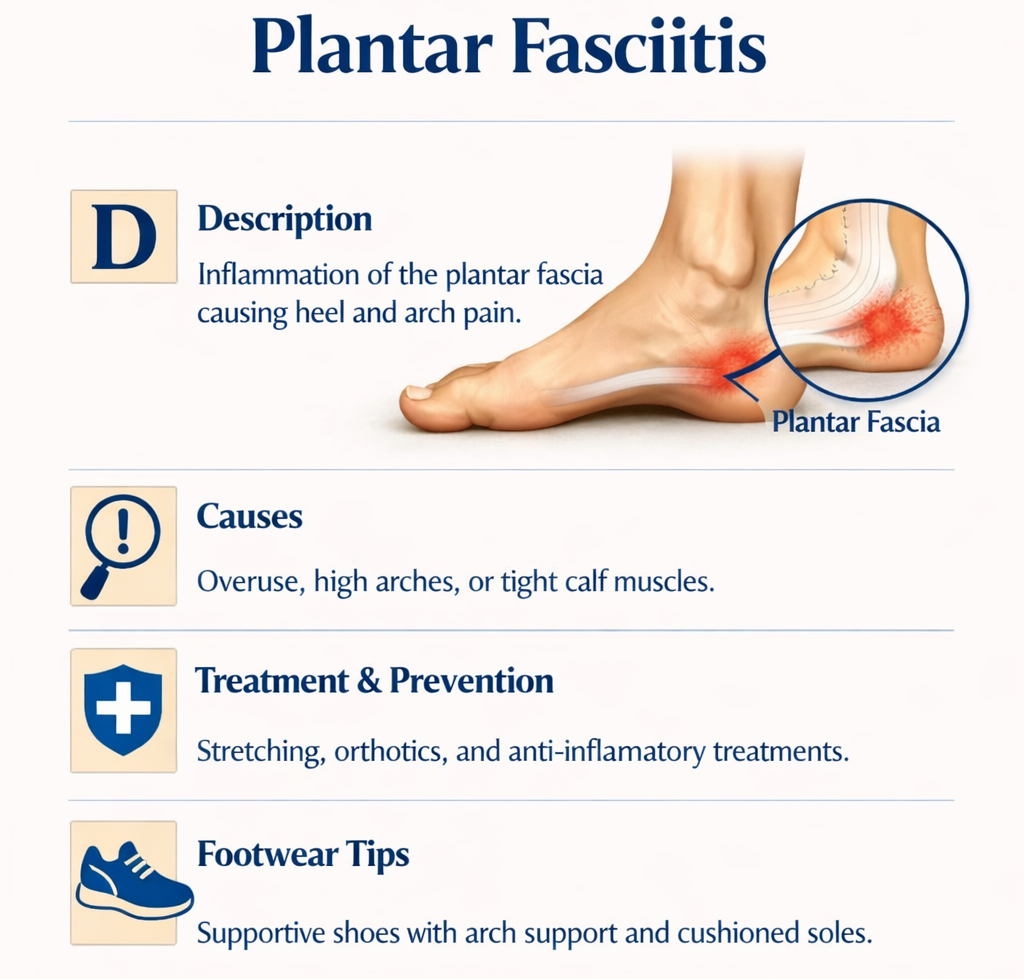
Plantar fasciitis is probably the most common foot complaint I hear about. It’s inflammation of the plantar fascia — the band of tissue that runs along the bottom of your foot — and it typically causes heel and arch pain that’s worst first thing in the morning.
Overuse, poor footwear, and abnormal foot mechanics are the usual culprits. Rest, ice, stretching, and anti-inflammatory medications help, along with physical therapy for more stubborn cases. Arch-supportive shoes with good cushioning are essential — this is one condition where the right shoe can genuinely change your quality of life. I’ve seen it happen more times than I can count.
Achilles Tendinitis:
Causes, Treatment, and Footwear Tips
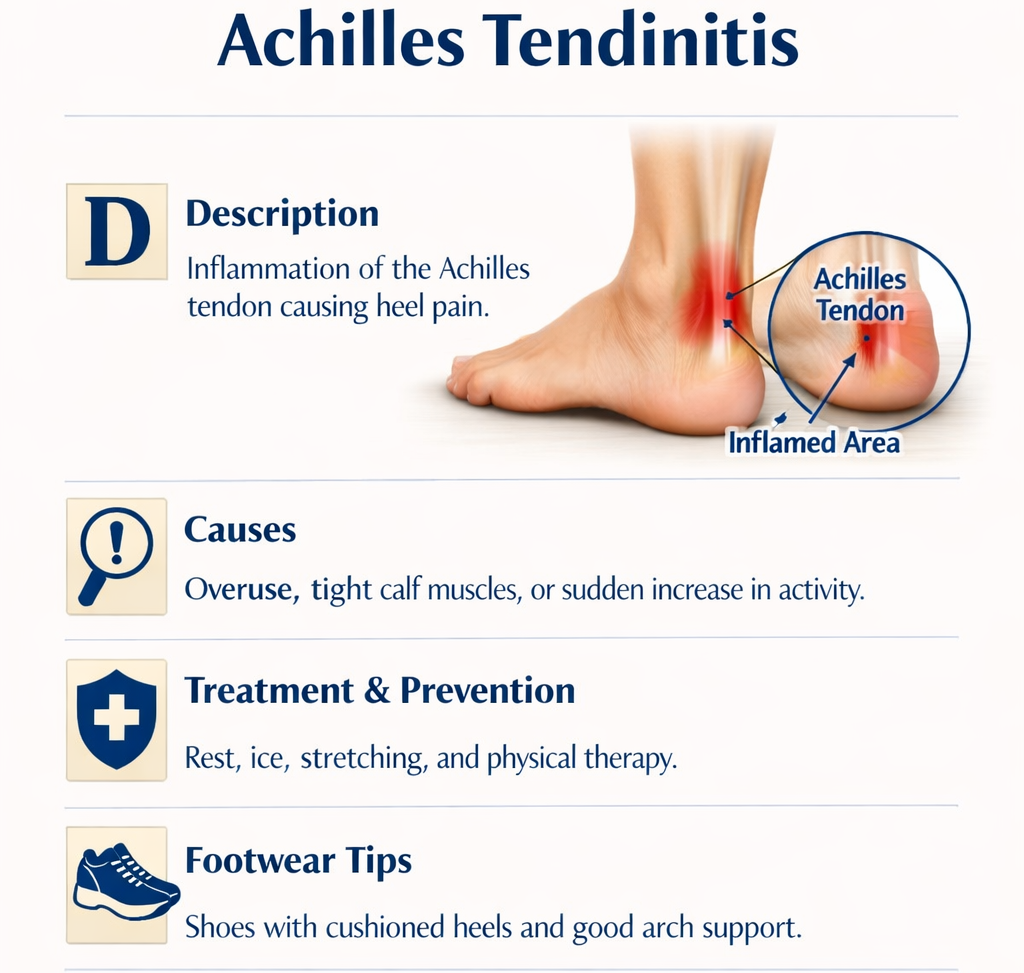
The achilles tendon connects your calf muscles to your heel bone, and when it gets inflamed — usually from overuse, intense physical activity, tight calves, or overpronation — it lets you know loud and clear.
Rest, ice, anti-inflammatory medications, stretching, and orthotic inserts with heel lifts are all part of the recovery picture. For footwear, you want solid arch support, proper cushioning, an elevated heel, and a firm heel counter to stabilize the heel and ankle. A rocker bottom sole can also help reduce pressure during walking — this is something I’m happy to help you find if you’re dealing with this one.
Shin Splints:
How Shoes Can Help Prevent and Relieve Pain
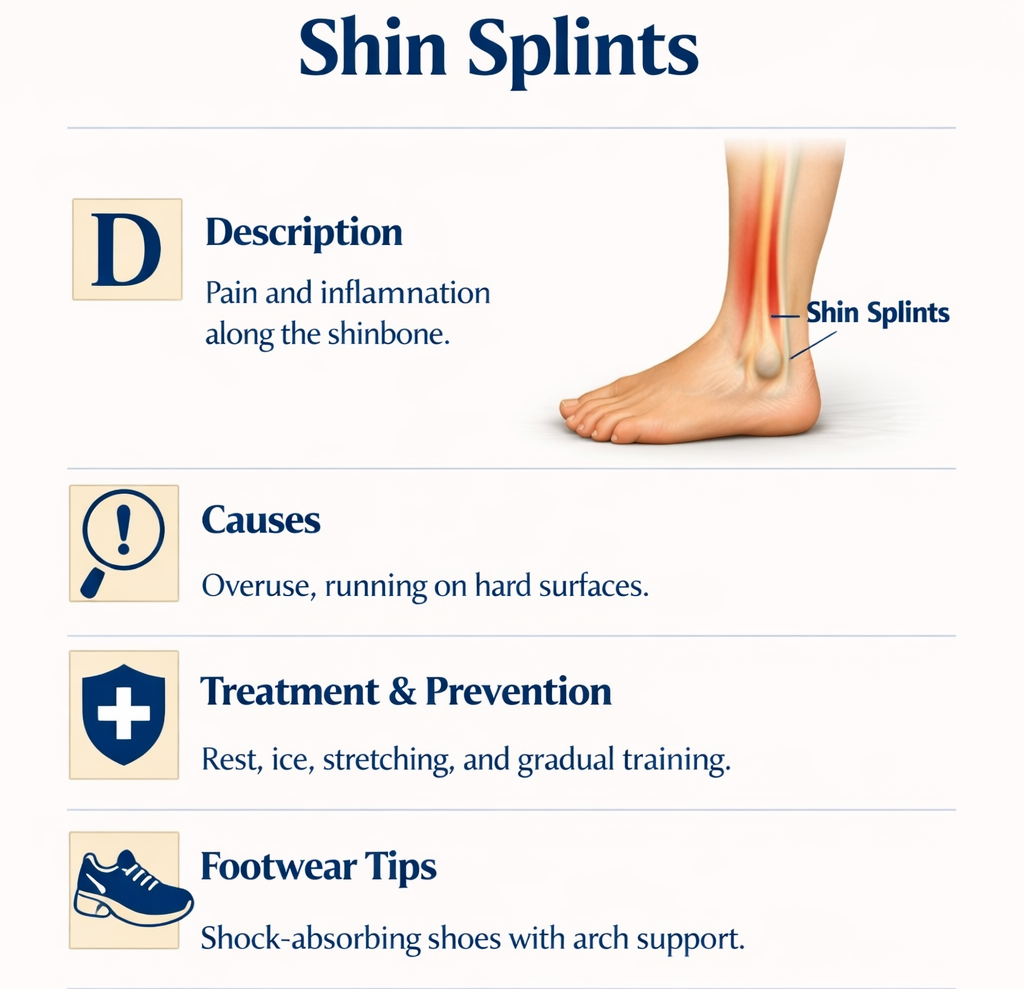
Shin splints are that familiar ache along the side of the shinbone, often hitting runners and anyone doing high-impact activities. Overpronation, improper footwear, and muscle imbalances are common contributors.
Ice, rest, stretching, and strengthening exercises help, along with orthotic inserts. Shoes with good shock absorption, arch support, and built-in stability features make a real difference. Brands like Brooks — with their GuideRails technology — and Hoka — with their H-Frame or J-Frame designs — are specifically engineered for this kind of support, and we carry options like these at the store.
Ingrown Toenails:
Prevention and the Role of Shoe Fit
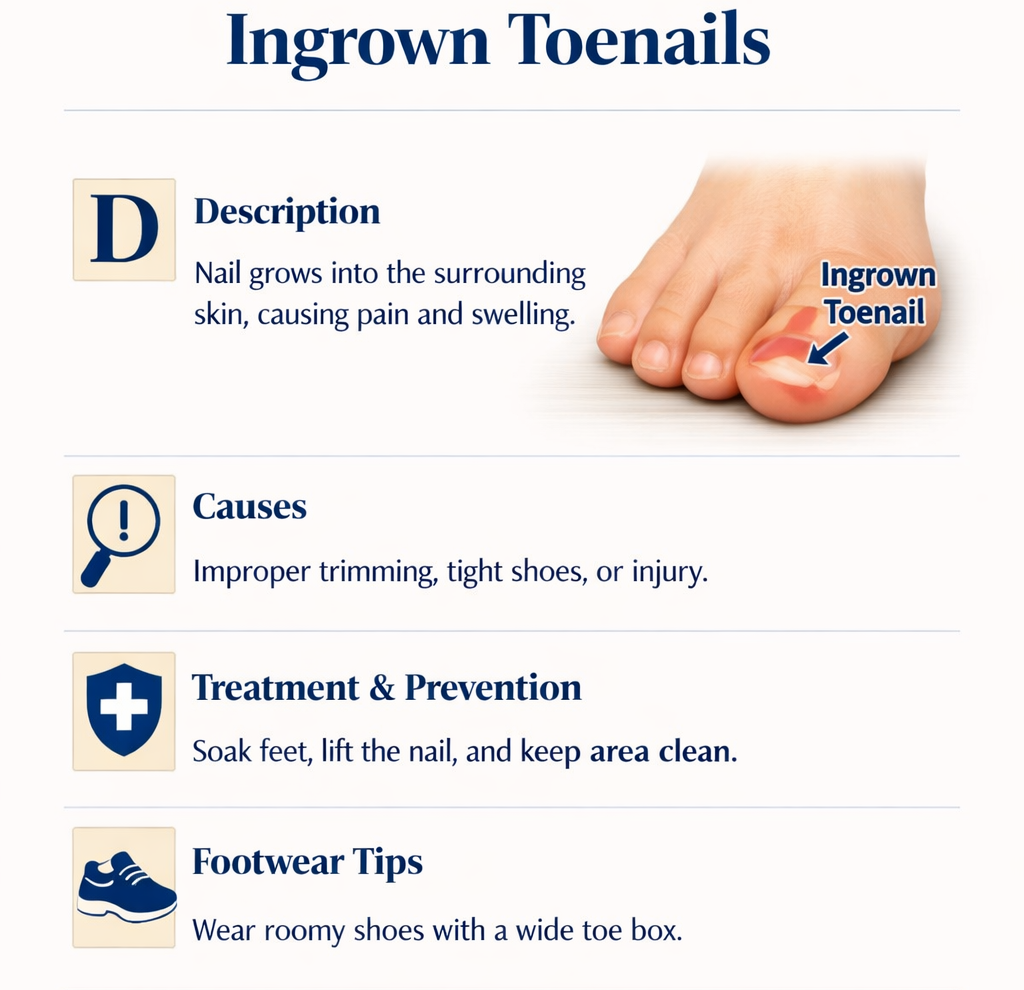
Simple but painful. When the sides of a toenail dig into the surrounding skin, it causes pain, swelling, and sometimes infection. Improper nail trimming, shoe pressure, injury, and poor foot structure are all causes — and women tend to be more prone to them.
Trimming toenails straight across, soaking in warm water, and antibiotics if infected are the usual care steps. The footwear solution is straightforward: a roomy toe box that keeps pressure off the toes entirely goes a long way toward prevention.
Quick Reference:
Foot Conditions & Footwear Solutions
| Condition | What to Look for in a Shoe |
|---|---|
| Overpronation | Stability or motion control shoe; structured midsole; GuideRails or J-Frame support |
| Supination | Neutral shoe with extra cushioning; flexible outsole; shock absorption |
| Bunions | Wide or extra-wide toe box; low heel; soft, flexible upper |
| Hammertoes | Deep, roomy toe box; flexible mesh upper; non-compressive fit |
| Heel Spurs | Strong arch support; cushioned heel; orthotic-friendly insole |
| Corns & Calluses | Proper fit; cushioned insoles; soft materials that reduce friction |
| Morton’s Neuroma | Low heel; roomy toe box; cushioning; arch support; breathable mesh |
| Plantar Fasciitis | Firm arch support; cushioned midsole; deep heel cup; orthotic-friendly |
| Achilles Tendinitis | Elevated heel; firm heel counter; arch support; rocker bottom sole |
| Shin Splints | Shock absorption; arch support; stability features; orthotic inserts |
| Ingrown Toenails | Roomy toe box; no compression at the toes; proper length |
Diabetic Foot Care:
Why Footwear Matters More Than You Think
I want to take a moment to speak directly to anyone managing diabetes, because foot care is especially critical in that situation.
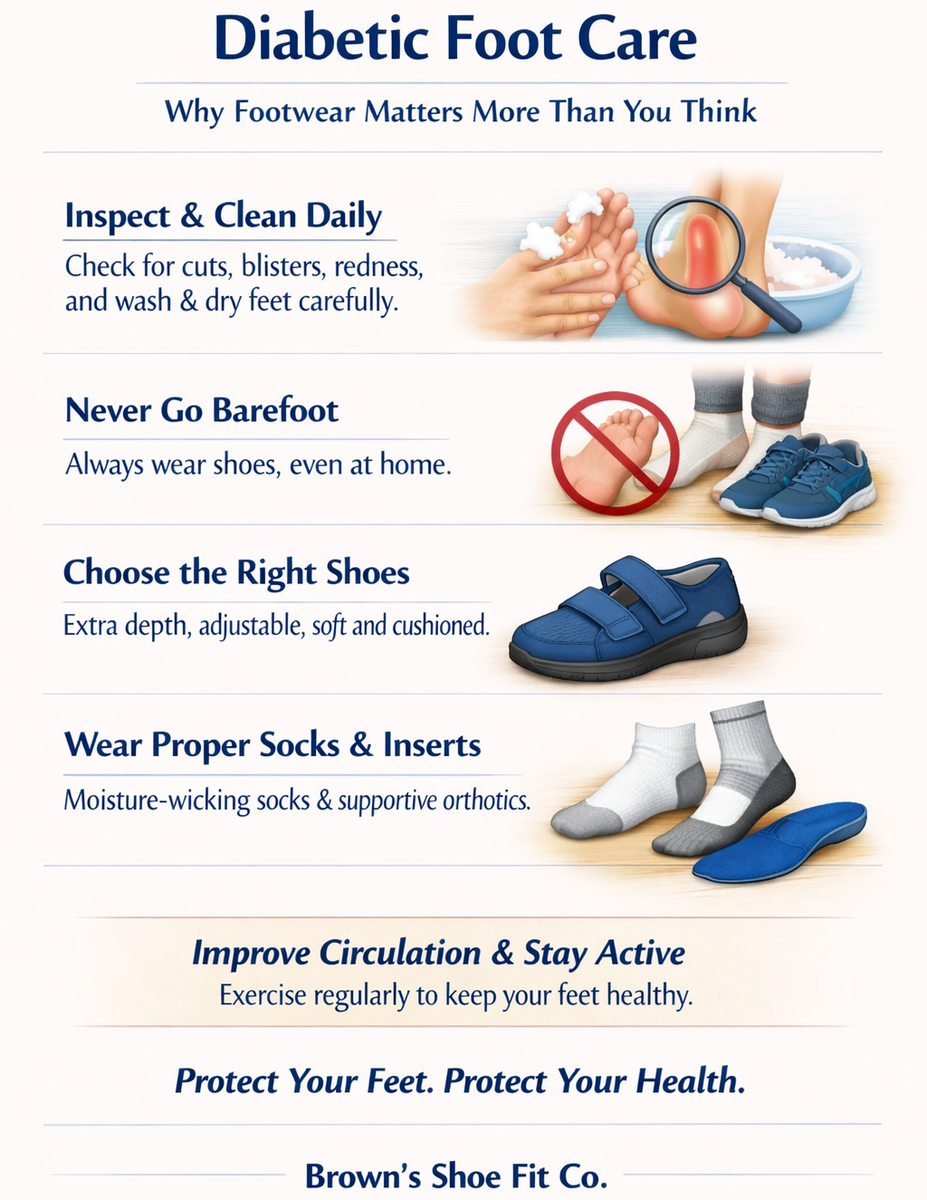
Diabetes can cause neuropathy — reduced sensation in the feet — which means small problems like blisters or cuts can go unnoticed and become serious. Daily foot care is essential: wash your feet with warm soapy water, check for sores, cuts, blisters, corns, or redness, dry thoroughly (but not between the toes, where moisture can cause infection), and trim toenails straight across.
Movement matters too — exercise improves circulation in the legs and feet, especially when paired with proper footwear.
People managing diabetes need shoes with extra width to reduce pressure points, adjustable closures to accommodate foot swelling, and soft, padded materials throughout. Moisture-wicking socks and orthotics round out the picture. And please — avoid going barefoot, even at home. It’s one of the most important things you can do to protect your feet.
If you or someone you love is managing diabetes and hasn’t thought much about footwear, please come talk to us. This is exactly the kind of thing we’re here for.
The Bottom Line on Foot Health
Your feet are the foundation of everything. When they hurt, everything hurts — your knees, your hips, your back, your mood. The good news is that so many of these conditions are preventable or manageable with the right information and the right footwear.
At Brown’s Shoe Fit Co. in Storm Lake, this is what we do every single day — not just sell shoes, but genuinely help people find the right fit for their feet and their lives. Whether you’re already dealing with one of the conditions above or just want to be more proactive about your foot health, I’d love to help.
Stop in and see us, or visit us online at brownsshoefitco.com. Your feet will thank you — and so will the rest of your body.
— Emily Uhlenhopp, Owner, Brown’s Shoe Fit Co. — Storm Lake, Iowa
Why Buy Yours From Brown’s Shoe Fit Co.?
With 73 locally owned and operated locations across the Midwest, Brown’s Shoe Fit Co. has been a trusted name in footwear since 1911. Known for our personalized service and commitment to quality, Brown’s Shoe Fit is the go-to destination for comfortable, quality footwear for all ages. Each of our stores offers a footwear selection unique to the needs of our communities, with a knowledgeable staff trained to give every customer the best fit possible. To learn more about us, visit brownsshoefitco.com or find a store near you!