Why Your Feet Change Size as You Age
The Biology Behind Why the Size You’ve Worn for Years Might Not Fit You Anymore
Most people settle on a shoe size somewhere in their twenties and treat it as a permanent fact about themselves — like their height or their blood type. But unlike those things, shoe size genuinely changes over time, and for reasons that are completely normal and well understood. If your shoes have started feeling tighter, if your arch seems lower than it used to be, or if the size you’ve worn for decades suddenly doesn’t feel right, you’re not imagining it. Your feet have changed — and here’s why.
Your Feet Don’t Shrink — They Spread
The most common age-related foot change isn’t a dramatic transformation. It’s gradual, and it happens in two directions: down and out.
Feet tend to get longer and wider with age, not shorter or narrower. The primary driver is the slow loosening of the ligaments and tendons that hold the foot’s structure together. Over decades of walking, standing, and bearing load, those connective tissues lose some of their elasticity. The arch — which is maintained not just by bone structure but by the tension of ligaments and the strength of the muscles that support them — gradually flattens. When the arch drops, the foot spreads forward and outward. The result is a foot that is measurably longer and wider than it was at 25.
This process is gradual enough that most people don’t notice it happening — until they try on a pair of shoes that used to fit perfectly and find them inexplicably uncomfortable.
The Ligament Factor:
Why Everything Gets a Little Looser
Ligaments are the fibrous connective tissues that hold your bones together at every joint in your body, including the roughly 33 joints in each foot. They’re designed to be strong but not rigid — a certain degree of flexibility is necessary for normal movement. But ligaments are also subject to cumulative wear. Over time, and particularly under the influence of hormones, body weight, and simple repetitive stress, they lose some of their tensile strength.
The practical effect in the foot is that the structures holding your arch in place — primarily the plantar fascia and the spring ligament — gradually allow the arch to descend. This is called pes planus, or acquired flat foot, and it’s one of the most common age-related foot changes there is. For many people it causes no significant pain; for others, the change in mechanics leads to heel pain, arch fatigue, and discomfort that radiates up into the ankle, knee, and lower back.
Pregnancy and Hormonal Changes
For women, pregnancy is one of the most significant — and fastest — drivers of foot change. During pregnancy, the body produces a hormone called relaxin, which loosens ligaments throughout the body in preparation for childbirth. This loosening doesn’t discriminate: it affects the feet as much as the pelvis. Combined with the additional weight the feet are bearing, the result is often a permanent increase in foot size — typically half a size to a full size, and sometimes more.
Critically, this change is often permanent. The ligaments that loosened during pregnancy don’t always fully return to their pre-pregnancy tension. Many women find that their pre-pregnancy shoes no longer fit after their first child — not because of temporary swelling, but because their feet have genuinely changed shape.
“We see this regularly — someone comes in who wore the same size for fifteen years, went through a pregnancy, and now nothing fits right. It’s not unusual at all. A proper remeasurement and refit makes an enormous difference.”
— Brown’s Shoe Fit Co.
Weight Changes
The feet bear the full load of the body with every step. When body weight increases — whether through aging, lifestyle changes, or pregnancy — the additional load accelerates the flattening of the arch and the spreading of the forefoot. The foot essentially compresses under greater pressure, spreading outward in ways that change both length and width.
Weight loss can also affect foot size, though typically less dramatically. Some people find that significant weight loss results in a slightly narrower foot, particularly across the midfoot and heel where fat padding compresses under load.
The Gradual Loss of Fat Padding
The bottom of a healthy foot has a layer of fat padding — particularly in the heel and across the ball of the foot — that acts as a natural shock absorber. Like most soft tissue, this padding thins with age. The process is gradual but cumulative: by the time most people reach their sixties and seventies, the fat pad under the heel may be significantly thinner than it was in their forties.
The practical effect is that hard surfaces feel harder. Impacts that were once absorbed by that natural cushioning now travel more directly into the heel bone and up through the ankle and knee. This is one of the reasons why comfort and cushioning become more important priorities in footwear as people age — it’s not just preference, it’s a genuine change in the foot’s ability to absorb impact on its own.
Toe Changes:
Bunions, Hammertoes, and Widening Forefeet
The forefoot — the wide, toe-bearing section at the front of the foot — tends to widen and change shape with age in ways that affect fit as much as pure length does.
- Bunions are bony protrusions at the base of the big toe, caused by the toe angling inward over time. They’re partly genetic, but they’re also worsened by years of narrow or poorly fitted footwear. A bunion changes the effective width of the forefoot significantly and can make formerly comfortable shoes feel pinching and painful.
- Hammertoes occur when the middle joint of a toe bends downward permanently, changing the way toes interact with the top of the shoe. They can develop from years of toe box compression and become more pronounced with age.
- General forefoot widening happens even without specific conditions — the natural spread of the foot over decades means the ball of the foot tends to become wider, requiring more room across the widest part of the shoe.
How Much Can Feet Actually Change?
Research on age-related foot changes suggests that most people’s feet grow measurably longer and wider as they age, with the most significant changes typically occurring between young adulthood and middle age, and again in later life. The changes aren’t dramatic year to year — but over a decade or two, they add up.
| Life Stage / Trigger | Typical Effect on Foot Size | Primary Cause |
|---|---|---|
| 20s to 40s | Gradual widening; slight lengthening | Arch flattening, ligament laxity |
| Pregnancy | Up to one full size increase, often permanent | Relaxin hormone, added weight |
| Significant weight gain | Wider forefoot, lower arch | Increased load on arch structures |
| 50s and 60s | Continued widening; more pronounced arch drop | Cumulative ligament laxity, fat pad thinning |
| 70s and beyond | Reduced cushioning, possible toe deformity | Fat pad atrophy, bunion and hammertoe progression |
What This Means for How You Should Shop
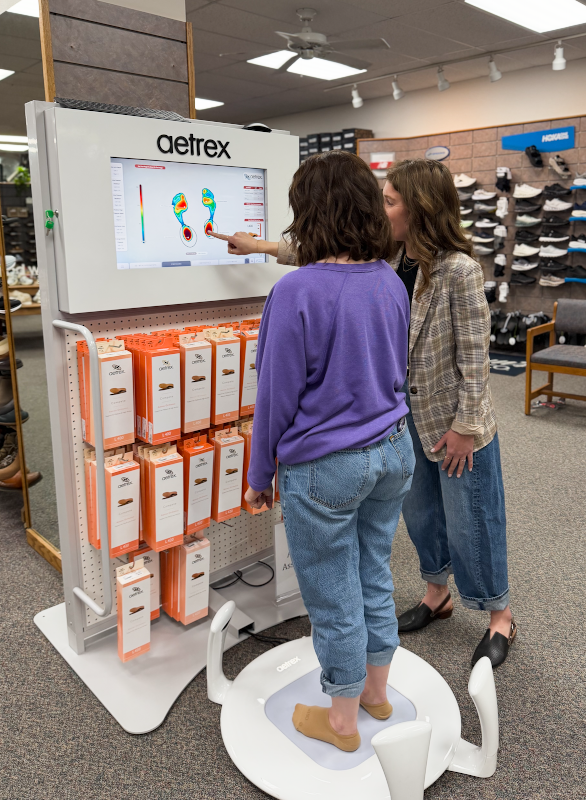
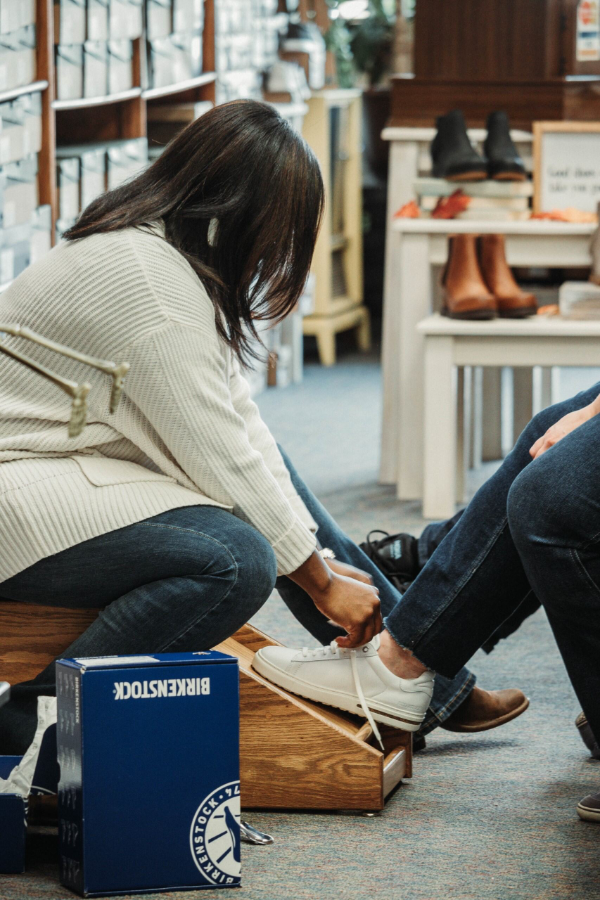
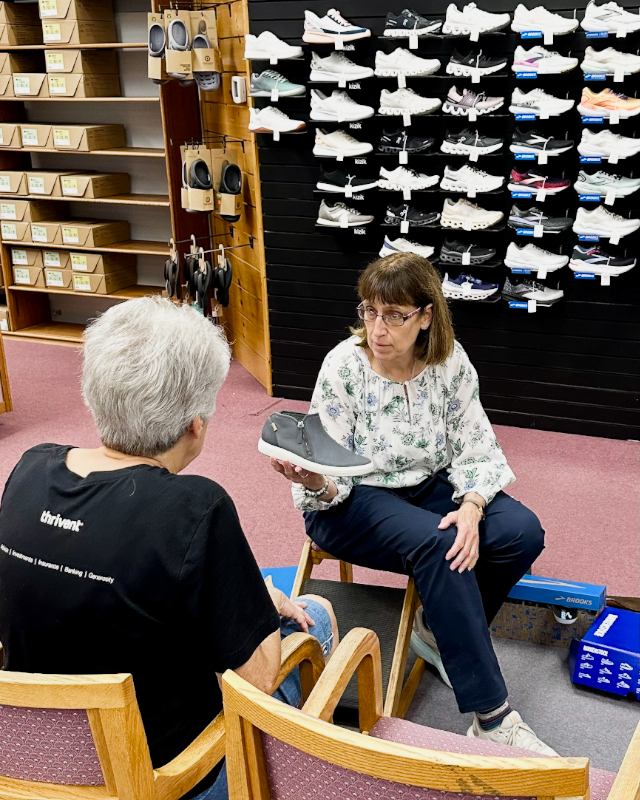
The practical takeaway is simple: don’t assume your size. Have your feet measured regularly — at minimum every few years, and any time you experience a significant life change (pregnancy, meaningful weight change, new foot discomfort). Treat your size as a current fact, not a permanent one.
A few specific things worth checking at your next fitting:
- Length: Have both feet measured. It’s common for them to differ by half a size or more, and that gap can widen with age.
- Width: If you’ve never been fitted for width, you may be surprised. Many people who have always found shoes “a little tight” are simply wearing the wrong width.
- Arch support needs: If your arch has dropped significantly, a shoe with more built-in support — or a supportive insole — may make a meaningful difference in daily comfort.
- Toe box room: As the forefoot widens and toes change shape, a roomier toe box becomes more important. Pinching at the front of the shoe isn’t just uncomfortable — over time, it makes toe deformities worse.
Why Buy Yours From Brown’s Shoe Fit Co.?
With 73 locally owned and operated locations across the Midwest, Brown’s Shoe Fit Co. has been a trusted name in footwear since 1911. Known for our personalized service and commitment to quality, Brown’s Shoe Fit is the go-to destination for comfortable, quality footwear for all ages. Each of our stores offers a footwear selection unique to the needs of our communities, with a knowledgeable staff trained to give every customer the best fit possible. To learn more about us, visit brownsshoefitco.com or find a store near you!